
Open guide contents
Follow the security first, then the loan product.
Starting with a rate or product name reverses the correct order. The lender first needs to know what it can legally secure, value and sell if the debt is not repaid.
Will the home remain movable?
Wheels, a trailer chassis, intended relocation or a site arrangement that allows removal all point away from the home being ordinary mortgage security.
Will it become an approved permanent dwelling on acceptable land?
Confirm the title, zoning, planning/building pathway, affixture, services, occupancy approval and the borrower’s legal interest in the land.
Will the lender accept the dwelling and completed value?
Minimum internal area, property type, postcode, saleability, other dwellings, construction method and valuation comments can change the LVR or exclude the security.
Can the lender pay in the way the contract requires?
Standard on-site progress stages do not automatically fund factory milestones. Confirm when title, possession, insurance and lender security arise.
Does the intended use fit the approval and credit category?
A private home, rental, four-cabin short-stay project and worker accommodation may have different building classifications, evidence and lending pathways.
The key distinction
A project can be lawful but outside lender policy, or financeable in principle but not lawfully usable as intended. Planning approval, building approval, lender approval and insurance acceptance are separate decisions.
“Tiny home” is a market label—not one legal or lending category.
Classification depends on physical form, legal attachment, land control and use. A small floor plan does not make every project the same security.
Fixed residential dwelling. A home designed to remain permanently attached to the land may be assessed as residential real property when the land, approvals, building classification, services, valuation and lender policy align.
Prefabricated or modular dwelling. Factory construction does not make a home movable. A prefab home intended to be permanently fixed to land can still be residential construction—but the off-site payment schedule creates a separate funding problem.
Tiny Home on Wheels. A THOW may be a low-ATM trailer or caravan for vehicle purposes, but road compliance does not establish where it can be occupied or make it mortgage security.
Relocatable or manufactured home. A home in a park, estate or leased site may sit under a site agreement rather than a freehold title. The buyer may own the structure without owning mortgageable land.
Business or accommodation project. Short-stay cabins, worker housing or multiple units can change building classification, planning use, insurance, valuation and the type of finance required.
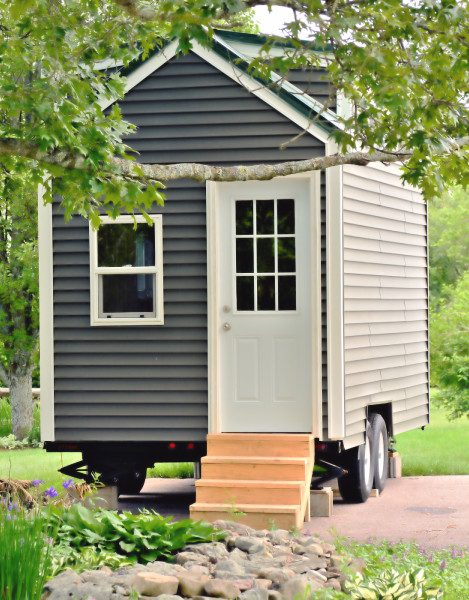
| Project form | Likely security starting point | Evidence that matters | Common lending failure |
|---|---|---|---|
| Fixed primary or second dwelling | Mortgage over the land and completed dwelling. | Title, permits, builder contract, plans, specifications, services and on-completion valuation. | The dwelling is too small or non-standard for policy, or completed value does not support total cost. |
| Fixed prefab/modular home | Land is often the only lender security until the modules are permanently affixed. | Manufacturer, factory milestones, ownership of work in progress, inspections, transport, affixture and insurance. | Builder needs factory payments before the lender is willing or able to advance funds. |
| Tiny Home on Wheels | Usually no mortgage over the THOW itself; possible equity, unsecured or specialist asset/business path. | VIN/chassis, RAV/vehicle compliance, weight, supplier invoice, PPSR, insurance and lawful site rights. | Project is described as a home loan while the lender sees a movable asset without mortgageable land. |
| Manufactured or relocatable home in a park/estate | Structure and site agreement rather than conventional land title; policy is narrow. | Site tenure, assignment and termination rights, fees, removal rights, resale restrictions and structure ownership. | Borrower owns the home but not acceptable real-property security. |
| Short-stay or multi-cabin project | Business/commercial or specialised property security, depending on title and operation. | Planning use, NCC class, operating approvals, forecasts, management, insurance and exit. | Residential assumptions are used for a commercial accommodation project. |
Five tests sit between a good design and an approvable loan.
The borrower still needs to pass ordinary credit assessment, but tiny-home projects add several layers that a standard established-home purchase does not have.
Acceptable security
Is there a first-ranking mortgage over acceptable land? Will the completed structure legally and physically form part of the real property? Is the location and title acceptable?
Completed market value
Will a valuer recognise the dwelling, site works and intended use? Cost, custom features and lifestyle value do not automatically translate into recoverable market value.
Builder and contract
Is the builder or manufacturer acceptable? Is the scope fixed, insurable and inspectable? Does the contract identify the completed home, exclusions and payment milestones?
Drawdown control
Can the lender verify each stage, retain adequate security and pay at the required time? Factory milestones are not the same as slab, frame, lock-up and completion.
Borrower and repayment
Income, expenses, liabilities, credit, deposit or equity and buffers must support the debt under the applicable residential, personal, asset or business methodology.
One weak layer can change the whole pathway
A strong borrower cannot make unacceptable security acceptable. Valuable land cannot fix an unsupported factory-payment schedule. Lawful use does not guarantee valuation or lender appetite.
The same tiny home can move from standard residential to specialist treatment.
Rate Challenge analysed home-lending policies across around 50 lenders. The ranges below are woven into the practical questions a borrower should ask rather than presented as a lender list.
Minimum internal area
Minimum internal-area tests can range from about 25m² to 50m² across different property categories, with 40m² and 50m² the most common. A detached tiny home below 40m² should be treated as specialist security until confirmed.
Size-linked LVR
Where a small dwelling is accepted, the maximum LVR can still be reduced. Size-linked settings can range from about 60% to 95%, with the result shaped by floor area, location, density, valuation and marketability.
Off-site factory funding
Treatment ranges from no lender funds before affixture to dedicated pathways that may release roughly 60%–80% of the build contract during factory construction, usually subject to land-equity caps, manufacturer controls and inspections.
Owner builder and cost-plus
Owner-builder maximums can range around 50%–80% LVR. Cost-plus contracts, where accepted, can tighten to roughly 60%–70% and may require stronger contingency, supervision and quantity-surveyor controls.
Rental income treatment
Usable residential rental income can range from about 60% to 100% of evidenced rent, with 80% the most common standard setting. The higher end is generally limited to net rent or special circumstances, and proposed second-dwelling rent still needs approval and valuation evidence.
Time to start and finish
Construction settings often expect work to start within about 6–12 months and finish within roughly 12–24 months. Factory lead times, delayed land settlement and approval delays can therefore affect whether an approval remains usable.
Why a financeable home can still have an unfinanceable payment schedule.
Traditional construction lending assumes that each funded stage becomes part of the lender’s mortgaged land. Factory construction breaks that assumption until the home is delivered and permanently affixed.
Land may be the only security
The lender may hold a mortgage over vacant land while the borrower is asked to fund a large deposit for a home being built elsewhere.
Work in progress sits off site
The lender needs controls over invoices, inspections, ownership, insurance and manufacturer failure. A standard site valuation may not capture the off-site asset.
Affixture and services matter
Remaining funds may depend on permanent installation, utility connections, inspections, occupancy evidence and confirmation that the dwelling now forms acceptable security.
What a dedicated off-site construction pathway can look like
The policy spectrum runs from no funding before the dwelling is installed to controlled factory-stage advances. The contract and land equity must support the exact release method.
No pre-affixture funding
Some policies will not advance against an unassembled kit, transportable dwelling or off-site work in progress. Borrower funds may need to cover factory deposits and milestones until the home is fixed to the land and connected.
Dedicated factory pathway
Where a lender has a documented prefab pathway, pre-affixture releases can sit around 60%–80% of the build contract and may also be capped by a multiple of available land equity, approved manufacturers and inspection controls.
Choose the pathway by security and execution—not by the word “tiny”.
No rate or term is shown because these pathways sit across different credit products and security types. The dedicated calculator is the correct place to model repayments.
| Pathway | When it may fit | What is assessed | Critical execution issue |
|---|---|---|---|
| Standard residential construction loan Land-backed | Approved fixed dwelling built on acceptable land using a contract and stage schedule the lender accepts. | Land/title, builder, contract, permits, minimum size, completed value, serviceability and cost to complete. | The tiny-home contract may not match ordinary on-site progress stages. |
| Prefab/off-site construction loan Special policy | Factory-built home intended to be permanently affixed, with suitable manufacturer and land equity. | Factory milestones, manufacturer, inspections, ownership, land equity, transport, affixture and services. | Funds are needed before the lender has the completed dwelling on its land security. |
| Equity release or home-loan top-up Other property security | Borrower owns another acceptable property with usable equity and can service the additional debt. | Purpose, valuation, existing debt, resulting LVR, income and whether works trigger construction controls. | The tiny home may not add value to the property even though the debt is secured by it. |
| Land purchase followed by construction Two-stage | Land is bought before the final home, builder or approvals are ready. | Vacant-land policy first, then a new construction assessment, valuation and cost-to-complete review. | Approval for land does not guarantee approval for the later build. |
| Unsecured personal loan No property security | Private-use movable home or smaller funding gap where the borrower qualifies without security. | Personal income, debts, credit, loan purpose, supplier evidence and total repayments. | Loan amount and one-off settlement may not match a long factory build with staged payments. |
| Specialist asset finance Case by case | An identifiable movable asset accepted by a particular lender, sometimes for business use. | VIN/chassis, manufacturer, invoice, age, use, marketability, seller and settlement control. | Not every THOW is accepted as an asset, and many facilities pay only at delivery or completion. |
| Business or commercial finance Income-producing use | Short-stay, tourism, worker accommodation, farm-stay or a broader operating business. | Business history/cash flow, forecasts, planning use, site tenure, insurance, security and exit. | The project may need several facilities and cannot be assessed as a residential home. |
| Cash or staged self-funding No lender | Lender options are too narrow, or the borrower chooses to avoid debt or fund early factory stages. | Cash reserve, contract protection, supplier risk and ability to finish the complete project. | Paying early can expose the buyer if the supplier fails or approvals do not arrive. |
Do not combine unlike products only to reach a target amount
Multiple personal or short-term facilities can create high repayments, overlapping credit enquiries and a weaker future mortgage position. The total debt, timing and exit should be assessed as one plan.
The project cost is not the lender’s recoverable value.
A lender lends against an assessed security value, not the emotional value, supplier price or sum of every invoice.
What exists before work
For a land-backed project this may be the current property or vacant-land value. Before prefab affixture, it may be the lender’s only real-property security.
What the finished property should sell for
The valuer considers lawful use, size, quality, location, market evidence, services, other dwellings and whether the home is permanently part of the land.
What is still required to finish
The lender needs enough verified funds to complete permits, site works, delivery, affixture, utilities and the dwelling—not just the factory contract.
Minimum size and marketability
Minimum internal-area tests commonly sit at 40m² or 50m². Selected studio or apartment policies can start around 25m²–35m², but smaller or less marketable dwellings may attract a lower LVR, location limits, a credit exception or no acceptable mortgage pathway.
Site works may not add dollar-for-dollar value
Access, cranage, wastewater, retaining, landscaping, off-grid systems and custom features can be necessary to use the home but may not increase valuation by their full cost.
Multiple dwellings change the comparison
A main house plus a second dwelling can be valued as one property. Four short-stay cabins or a commercial accommodation site may require a different valuation methodology and lender.
Movability can reduce mortgage value
If the valuer sees the structure as removable personal property rather than a permanent improvement, the mortgage valuation may rely primarily on the land and existing improvements.
Acceptable security still needs an acceptable repayment position.
Construction, equity, personal and business lenders can use different assessment methods. A strong completed value does not replace the borrower’s ability to service the debt.
Mortgage assessment buffer
APRA-regulated banks apply a minimum mortgage serviceability buffer of 3 percentage points above the loan rate. Lenders also apply their own living-expense, debt, income and policy assumptions.
Secondary-dwelling income
Across residential rental policies, usable income can range from about 60% to 100% of evidenced rent, with 80% the most common standard setting. Proposed second-dwelling rent also commonly requires self-containment, lawful approval and valuation or rental evidence.
Short-stay and operating income
Forecast occupancy or nightly rates may receive limited weight without trading evidence, contracts, market support, approvals and a credible operating-cost model.
Existing mortgage and future borrowing
An equity top-up, personal loan or asset facility adds a repayment and may reduce capacity for a later land purchase, home upgrade or refinance.
Interest during construction
Progressively drawn construction debt can reduce interest early, but the borrower still needs to cover rent, existing mortgage costs, variations and delays while the project is incomplete.
Buffers are part of the credit story
Post-settlement cash, contingency and the ability to absorb a delay matter more when approvals, transport, site works or factory completion can move independently.
The contract must describe a home the lender can fund and the buyer can recover.
Get legal advice before paying a large or non-refundable deposit. The lender reviews credit and security; it does not certify the supplier or protect every contractual risk.
Correct contracting entity
The quote, contract, invoices, bank account, builder/manufacturer identity and land owner should reconcile. Clarify who owns the home at each stage.
Complete specifications
Dimensions, chassis or structural system, inclusions, energy and engineering evidence, transport, foundations, services, exclusions and site responsibilities should be explicit.
Fundable payment stages
Every deposit and progress claim should align with work completed, inspection rights and the lender’s actual drawdown policy—not only the supplier’s cash-flow preference.
Title to work in progress
Ask who owns materials and the partly built home before delivery, whether they can be identified and separated, and what happens if the manufacturer becomes insolvent.
Insurance through the journey
Confirm factory, transport, cranage, installation, public liability, contract works and completed-home cover, including who bears risk at each transfer point.
Completion, defects and final payment
Set inspection, practical completion, defect, certification, connection, occupancy and final-payment requirements before work begins.
Owning the home is not the same as controlling mortgageable land.
Land title, an existing mortgage, lease or licence terms and removal rights can matter as much as the dwelling itself.
| Land position | Lending implication | Documents to obtain | Main risk |
|---|---|---|---|
| Own land outright | Potential mortgage or equity security, subject to title, zoning, valuation, services and the proposed works. | Title, rates notice, zoning/overlays, site plan, access, utilities and approval advice. | Land value or completed value may not support the full project cost. |
| Own mortgaged land | The existing lender controls the first mortgage and may need to approve further debt, construction and material changes. | Current loan statements, valuation, proposed plans, existing lender conditions and payout/refinance position. | Building with cash or another lender can breach mortgage conditions or create security conflicts. |
| Family-owned land | The borrower may have no mortgageable interest unless the owner participates and the lender accepts the arrangement. | Written occupancy/site agreement, ownership of improvements, utilities, access, sale/death/dispute and removal provisions. | The home owner can lose site access or value if family circumstances change. |
| Lease or licence | Often points to personal, asset or business finance rather than a standard home loan. | Term, renewal, termination, assignment, fees, permitted use, improvements, removal rights and landlord consent. | Loan term can outlast secure site tenure, or relocation costs can undermine resale. |
| Buying land and home | May be one construction transaction or separate land and build approvals. | Land contract, build contract, permits, valuation, total cost, settlement and build commencement timetable. | Land approval may settle before the home or construction pathway is confirmed. |
| Park or managed estate | The buyer may own the home but occupy under a site agreement rather than own land. | Site agreement, park rules, fees, sale restrictions, approval, assignment and removal provisions. | Resale and finance are constrained by site tenure and operator consent. |
Fixture status requires legal and valuation confirmation
Whether a structure becomes part of the land is a factual and legal question. Wheels removed, service connections or tie-downs alone do not provide a universal answer. Ask the solicitor, building professional, valuer and lender to assess the actual design and site arrangement.
A THOW sits under three separate rulebooks.
Passing one rulebook does not pass the other two. Road registration, lawful occupation and finance/security must each be confirmed.
Vehicle and trailer compliance
For low-ATM trailers—4.5 tonnes or less—the federal Road Vehicle Standards framework, applicable ADRs, VSB1 Revision 6 and Register of Approved Vehicles requirements are relevant before first supply.
Site and occupation
State and local rules decide whether the home can be installed, connected and occupied at the chosen site, for how long and for which use. Registration is not planning approval.
Finance and security
The lender decides whether it will lend unsecured, against another property, or against an accepted serialised asset. VIN/chassis, seller, invoice and settlement controls can matter.
For a new THOW
- Confirm the manufacturer’s vehicle approval pathway and RAV entry.
- Record VIN/chassis and final ATM/weight evidence.
- Confirm braking, lighting, dimensions and towing/transport plan.
- Match insurance to factory, transit, site and occupancy risks.
- Verify that finance can follow the supplier’s payment schedule.
For a used THOW
- Verify seller identity and ownership evidence.
- Search the PPSR using the correct VIN or chassis number.
- Repeat the PPSR search on or immediately before purchase.
- Inspect condition, weight, registration and modifications.
- Confirm the destination site and lawful occupation before settlement.
The same cabin can change category when its use changes.
Under the NCC, building classification follows the purpose for which a building is designed, constructed or adapted—not simply its size or marketing name.
Single dwelling
A detached home or one of a group of attached dwellings. A fixed tiny home used as one private dwelling may fall here when the approval authority confirms it.
Small accommodation or multiple short-stay dwellings
Can include a qualifying small boarding/guest house or four or more single dwellings on one allotment used for short-term holiday accommodation.
Larger or worker-style accommodation
Can include hotel/motel-style residential parts, dormitories and workers’ quarters when the project does not fit Class 1b or another residential class.
Why a lender cares about classification
Building class can change fire, access, certification, insurance, valuation, operating approvals and the credit team that assesses the transaction. Obtain classification advice from the relevant building surveyor/certifier before the finance application is framed.
National lending meets eight planning and building systems.
This table is a starting point only. Use the exact address, zone, overlays, title and intended use, then confirm with the relevant authority or qualified professional.
| Jurisdiction | Fixed dwelling starting point | Moveable / other starting point | Official check |
|---|---|---|---|
| Victoria | Planning Victoria’s guidance checked on 16 October 2026 describes a small second dwelling as up to 80m² on the same lot as an existing dwelling. Planning-permit requirements depend on the zone, overlays and other applicable provisions. A building permit is still required, and the dwelling cannot be separately subdivided. The guidance says corresponding changes to the Building Regulations 2018 and Minister’s Guideline 12 are to follow; confirm the applicable building requirements with a registered building surveyor. | THOW occupation depends on the actual site and local/state rules. Do not treat trailer registration as permission to live there. | Victorian small second dwellings |
| New South Wales | A secondary dwelling can use a DA or complying-development pathway where Housing SEPP and site standards are met; an occupation certificate is required before lawful occupation. | NSW says installing a moveable dwelling generally requires council activity approval unless a specific exemption applies. | NSW moveable dwellings · granny flats |
| Queensland | Queensland encourages fixed tiny/small homes as secondary dwellings. Secondary dwellings can be rented to anyone, but development and building approvals still apply. | The state says moveable tiny homes are generally treated like caravans and are not suitable for permanent living without the appropriate building framework and approvals. | Queensland tiny homes |
| Western Australia | R-Code-compliant ancillary dwellings up to 70m² on residential lots can be exempt from planning approval, subject to the current R-Codes and local requirements; a building permit remains necessary. | Local government, site and park rules require separate confirmation for movable homes or non-residential zones. | WA revised R-Codes |
| South Australia | The Planning and Design Code is property-based. Search the address and development type through PlanSA; development/building approval and, where required, a certificate of occupancy must be obtained. | Site use, caravan/moveable treatment and business accommodation need address-specific assessment. Granny flats may be rented beyond family use under current rules. | SA Planning and Design Code · granny-flat rental rules |
| Tasmania | Use PlanBuild Tasmania to identify property-specific planning, building and plumbing requirements and confirm with council or a licensed professional before work starts. | Do not assume wheels remove planning or occupancy requirements. Vehicle, plumbing and connection details can affect the pathway. | PlanBuild Tasmania |
| ACT | Most building work requires approval under the Building Act. A block containing a primary dwelling and a secondary residence cannot currently be subdivided as separate titles under the cited ACT planning guidance. | Lease purpose, planning approval, building approval and lawful occupation require ACT-specific confirmation. | ACT planning and building |
| Northern Territory | An independent unit needs building approval. It may avoid a development permit where the use is permitted and all zone, overlay, area, setback, parking and service requirements are met. | A demountable structure can be used, but it must still meet the relevant planning and building rules. Certain zones allow an independent-unit floor area up to 75m². | NT independent units |
Build the cost-to-complete schedule before the loan amount.
Dollar ranges are deliberately not hard-coded. The correct figure is the current written cost for the actual address, design, access and approval path.
Land and title
Purchase price, duty, conveyancing, finance, surveys, easements, covenants, lease/site fees and any existing mortgage.
Home contract
Base home, options, GST, design changes, appliances, decks, awnings, furniture, off-grid systems and contract exclusions.
Design and certification
Architect/designer, engineering, energy, soil, bushfire/flood, building surveyor/certifier and evidence of NCC suitability.
Transport and placement
Permits, escort, towing, freight, crane, road access, storage, delivery insurance, tie-downs and temporary works.
Site works and foundations
Earthworks, access, drainage, retaining, footings/slab/pads, landscaping, driveway, fencing and site remediation.
Services and occupation
Power, solar/battery, water, sewer/septic, gas, internet, fire safety, certificates, final inspections and occupancy approval.
Professional and legal
Planning, building, contract review, land/site agreement, tax/GST advice, valuation, lender legal and settlement costs.
Insurance and operation
Factory, contract works, transit, installation, home/trailer, landlord, public liability, business interruption and maintenance.
Contingency and retained cash
Variations, approval delays, site surprises, price escalation, extra rent/interest and a post-completion operating buffer.
Separate necessary cost from financeable value
Every necessary item belongs in the cost-to-complete schedule. Not every item will be funded by the lender or add the same amount to the valuation, so identify the cash-funded gap early.
Build a lender-ready evidence pack before the application.
Use this checklist to organise the file. It measures document readiness only—it is not an approval, eligibility or planning result.
Tiny-home evidence pack
Tick an item only when the current, complete document is available. The copy button creates a plain-text project brief for your records or adviser team.
Checklist progress stays in this browser only and is not submitted to Rate Challenge.
Four projects with four different credit stories.
These are decision examples, not lender approvals or rate quotes. They show which evidence and failure points move to the front of the assessment.
Fixed small second dwelling on existing mortgaged land
The borrower wants an approved fixed dwelling behind the existing home.
- Likely first lanes: construction variation, home-loan top-up or refinance.
- Key tests: existing lender consent, minimum dwelling size, completed value, permits, builder contract and cost to complete.
- Rental income: only after lender-specific evidence and approval rules are satisfied.
Factory-built permanent home on vacant land
The manufacturer requires factory milestone payments before delivery.
- Likely first lane: lender with explicit prefab/off-site construction policy.
- Key tests: land equity, manufacturer, contract, inspections, ownership, insurance and affixture.
- Main failure: a standard construction lender will not fund work that is not yet on the mortgaged land.
THOW on family or leased land
The buyer owns the movable home but not the site.
- Likely first lanes: equity in another property, personal finance, specialist asset/business finance or cash.
- Key tests: site agreement, lawful occupation, VIN/RAV/PPSR, supplier payment schedule and insurance.
- Main failure: assuming the THOW or family land can support an ordinary mortgage.
Four eco-stay cabins on one rural property
The project is designed for short-term accommodation and operating income.
- Likely first lane: commercial/business or specialised property finance.
- Key tests: planning use, NCC classification, occupancy, access/fire/services, forecast, management, valuation and exit.
- Main failure: presenting the cabins as four small residential homes instead of one accommodation business.
A government guarantee does not override lender security policy.
Scheme rules and lender rules must both be satisfied. A qualifying property type is not automatically an acceptable tiny-home security.
Australian Government 5% Deposit Scheme
The current scheme includes new or existing homes, house-and-land packages, off-the-plan purchases and vacant land with a building contract, subject to price caps, owner-occupation and participating-lender approval. The lender still applies its own credit and security policy.
What this means for tiny homes
A fixed home on land may need to satisfy the same dwelling, contract, valuation and construction tests described in this guide. A movable THOW without a conventional residential property interest is not made mortgageable merely because the buyer is a first-home buyer.
Resolve these red flags while you still have negotiating power.
Once a large payment is non-refundable, the buyer—not the lender—usually carries the risk that finance, approvals or site rights do not work as expected.
Unverified “finance available” claim
The supplier names a lender or product but cannot confirm current policy, security, maximum amount or whether factory milestones are funded.
Front-loaded payment schedule
Large deposits or factory payments are due before lender approval, inspection, title to work in progress or adequate security protection.
No written site approval path
The project relies on “it has wheels” or another generic exemption without written advice for the exact address, use and duration.
Quote excludes the hard costs
Transport, crane, access, foundations, engineering, services, permits, wastewater and contingency are outside the advertised home price.
Cost assumed to equal valuation
The buyer expects every dollar of customisation and site work to be recognised by the valuer or future purchaser.
No failure or exit plan
The contract, insurance and site arrangement do not explain what happens if the builder fails, approval is refused, the land is sold or the home must move.
Answers to the questions that sit between the idea and the loan.
Is there a standard tiny-home loan?
No single product covers every tiny home. Fixed land-backed dwellings, factory-built prefab homes, THOWs, park homes and accommodation businesses can sit in different residential, personal, asset or commercial credit categories.
When can a tiny home use a normal mortgage or construction loan?
Potentially when it becomes an approved permanent dwelling on acceptable mortgageable land and the lender accepts its size, type, location, builder, contract, valuation, payment schedule and the borrower’s serviceability.
Is a prefab home the same as a Tiny Home on Wheels?
No. Prefab describes how the building is manufactured. A prefab or modular home can be designed for permanent affixture to land. A THOW is designed around a trailer and continued movability. Finance and regulation therefore start from different places.
Can the lender fund the home while it is still in the factory?
Some lenders have explicit off-site or prefab policies; others do not. The answer depends on manufacturer, land equity, contract, inspections, ownership and how much security the lender has before affixture.
Does a minimum floor area apply?
Often. Policy thresholds can range from about 25m² to 50m² across different property categories, with 40m² and 50m² the most common tests. A smaller home can face a lower maximum LVR, tighter location rules or specialist assessment.
Can I mortgage a THOW by itself?
Usually not as ordinary residential real property. A THOW may instead be funded using equity in another property, unsecured personal finance, a specialist asset/business facility where accepted, or cash. Availability is case specific.
Does road registration let me live in a THOW on private land?
No. Vehicle compliance and registration are separate from planning, installation and occupation rules. Obtain written site-specific confirmation from the relevant authority.
Can I finance a tiny home on family-owned land?
Potentially, but the borrower may have no mortgageable interest in the land. Finance may depend on the land owner participating, other property security or a non-mortgage facility. A written site and ownership agreement is essential.
Can proposed granny-flat rent improve serviceability?
Sometimes, subject to lender policy. The home may need to be self-contained, lawfully approved and supported by a valuation or rental assessment. Lenders commonly shade rent and may not use it until the evidence is acceptable.
Can first-home buyer schemes fund a tiny home?
A fixed land-and-build transaction may be considered if it meets the scheme, property cap, owner-occupation and participating-lender rules. The scheme does not override lender security or construction policy, and a movable THOW is a different proposition.
What should I check before buying a used THOW?
Verify seller identity, ownership, VIN/chassis, PPSR, registration, RAV/compliance evidence, actual weight, modifications, condition, insurance, transport and lawful use at the destination site.
Are owner-builder or kit-home loans available?
They can be, but the supplied policy data shows owner-builder and kit/relocatable cases are frequently restricted or excluded. Expect stronger equity, permits, costings, experience, inspections and contingency requirements where a pathway exists.
How long does tiny-home finance take?
Timing depends on the pathway. A personal credit application is different from a land-backed construction loan requiring valuation, permits and contract review, while off-site prefab or commercial accommodation can add manufacturer, legal and operating checks. Start before the contract deadline.
Where should I model repayments?
Use the Tiny Home Finance Calculator to explore finance pathways and model repayments for your assumptions. Costs and available finance depend on the home, site, project and borrower.
Built from current official rules and lender-policy evidence.
Official links are starting points. The applicable law, planning pathway, building classification and lender criteria should be rechecked for the actual project.
- Australian Building Codes Board — building classifications: classification follows use; Class 1a, Class 1b and Class 3 distinctions used in this guide.
- ABCB — prefabricated, modular and offsite construction handbook: NCC compliance and evidence guidance for modern methods of construction.
- Australian Department of Infrastructure — low-ATM trailers: Road Vehicle Standards, RAV, ADR and VSB1 Revision 6 framework.
- PPSR — vehicle searches: caravans, campervans and trailers, VIN/chassis searches and search limitations.
- APRA — mortgage serviceability settings: minimum 3 percentage point mortgage serviceability buffer for APRA-regulated banks.
- Australian Government 5% Deposit Scheme: owner-occupier, property and participating-lender requirements.
- Rate Challenge policy research: we analysed home-lending policies across around 50 lenders for broad patterns in acceptable security, minimum floor area, construction, owner-builder treatment, off-site drawdowns and rental income. The guide presents those findings as general ranges rather than lender-by-lender rules.
- State and territory official planning sources: linked within the state table above, including Victoria, NSW, Queensland, WA, SA, Tasmania, ACT and NT.
Choose the resource that answers your next question.
Read the guide to understand the requirements, use the calculator to model repayments, or speak with a broker about your project.
Model broad repayment and pathway scenarios without creating a credit enquiry.
Open calculator → Broker serviceTiny Home Finance AustraliaHave the actual home, land, supplier, budget and payment schedule reviewed.
Review my project → Related serviceModular Home Loans AustraliaFor a prefabricated home intended to become a permanent residential dwelling.
Explore modular finance → Detailed guideConstruction Loan GuideGo deeper into valuations, progress draws, variations, contingency and settlement.
Read construction guide →